
Stainless steel cookware is durable, versatile, and well suited to everyday cooking. It can produce excellent browning on meat and vegetables, but it also has a reputation for making food stick.
The problem is usually not the pan itself. It is how the pan is heated, how much oil is used, and when the food is moved.
Once you understand a few basic techniques, stainless steel becomes much easier to cook with. This guide explains how to prevent sticking, control heat, achieve better browning, and keep your cookware in good condition.
Why Does Food Stick to Stainless Steel?
Unlike nonstick cookware, stainless steel does not have a synthetic coating designed to release food automatically.
When proteins such as eggs, fish, and meat come into contact with an improperly heated cooking surface, they can form bonds with the microscopic pores of the metal.
Three common mistakes make this more likely:
- Adding food before the pan is properly preheated.
- Using too much heat.
- Trying to turn food before it has developed a browned surface and released naturally.
The solution is to control the temperature and give the food enough time to cook.
Step 1: Preheat the Pan Properly
Preheating is one of the most important parts of cooking with stainless steel.
Place the empty pan over low to medium heat for approximately one to two minutes, adjusting for your specific pan thickness and stovetop.
You can test the temperature with a few drops of water:
- If the droplets immediately sizzle and evaporate, the pan is not hot enough.
- On a sufficiently heated surface, the droplets bead into a rolling ball that glides across the pan without evaporating instantly (the Leidenfrost effect).
- If the water droplets violently split into tiny balls and smoke, the pan is too hot—remove it from heat briefly to let it cool.
Do not leave an empty pan heating unattended or for longer than necessary. Excessive heat can damage cookware and cause discoloration.
Step 2: Add Oil at the Right Time
Once the pan is preheated, add a thin layer of cooking oil.
Swirl the pan to distribute it evenly across the cooking surface. Allow the oil to heat briefly, but do not let it smoke heavily.
If the oil begins smoking immediately, the pan is probably too hot. Reduce the heat and allow the temperature to come down before adding food.
Choose an oil suitable for the cooking temperature, such as refined avocado, canola, or sunflower oil.
Step 3: Prepare Food Before It Goes Into the Pan
Moisture on the surface of food can interfere with browning and cause excessive splattering.
Before cooking:
- Pat meat and fish dry with paper towels.
- Remove excess moisture from vegetables.
- Prepare ingredients before heating the pan.
- Avoid overcrowding the cooking surface.
If too much food is added at once, the pan temperature drops and the ingredients release moisture instead of browning properly. Cooking in smaller batches often produces better results.
Step 4: Let Food Release Naturally
One of the most common mistakes with stainless steel is trying to turn food too early.
When meat or fish first touches the pan, it will naturally stick to the surface. As the surface browns and cooks, the proteins contract and release naturally from the metal.
Instead of pulling or scraping the food away:
- Allow it to cook undisturbed for a little longer.
- Use a thin metal or high-heat spatula to gently check whether it releases naturally.
- If it still sticks firmly, give it another 30 to 60 seconds before testing again.
This technique is particularly useful when searing chicken, steak, fish fillets, and other protein-rich ingredients.
Step 5: Use the Browned Bits to Make a Pan Sauce
After searing, you may notice browned pieces of food stuck to the bottom of the pan.
These are called fond. They contain concentrated caramelized flavor and are useful for making simple pan sauces.
To use them:
- Remove the cooked food from the pan and set it aside to rest.
- Reduce the heat if necessary.
- Add a small amount of liquid, such as stock, wine, or water.
- Gently scrape the browned pieces from the bottom with a wooden spoon or heat-resistant spatula.
- Allow the liquid to reduce and finish with butter or fresh herbs if desired.
This is an easy way to turn the residue from cooking into a flavorful sauce while beginning the pan-cleaning process naturally.
How to Clean Stainless Steel Cookware
Stainless steel is relatively easy to maintain when cleaned correctly.
For everyday cleaning:
- Allow the pan to cool before washing.
- Remove food residue with warm water.
- Use mild dish soap and a non-abrasive sponge or cloth.
- Rinse thoroughly.
- Dry with a clean towel immediately to prevent water spots and mineral rings.
For stubborn food residue, add water to the pan and simmer it briefly on the stove to loosen the material before washing.
Brown or blue discoloration can occur when stainless steel is overheated. This heat tint affects appearance rather than cooking performance. For persistent discoloration or burnt-on residue, use a specialized cookware powder cleanser (such as Bar Keepers Friend) following the manufacturer’s instructions.
Avoid pouring cold water directly into an extremely hot pan: sudden temperature shocks can cause thermal warpage.
Common Stainless Steel Cooking Mistakes
| Mistake | Better approach |
|---|---|
| Adding food to a cold pan | Preheat the pan before adding oil and food |
| Using excessive heat | Start with low to medium heat |
| Adding wet ingredients | Pat meat, fish, and vegetables dry before cooking |
| Overcrowding the pan | Cook in smaller batches to avoid steaming |
| Turning food too early | Wait until the food sears and releases naturally |
| Leaving an empty pan on high heat | Preheat briefly and monitor the temperature closely |
| Scrubbing with coarse steel wool | Use warm soapy water or a non-abrasive stainless steel cleaner |
For comparing cookware materials and matching your cooking style, explore our interactive Cookware Material Finder and our guide on How to Clean and Season a Cast Iron Skillet.
Choosing Stainless Steel Cookware
A good stainless steel pan should distribute heat effectively, feel balanced, and have durable construction.
For everyday use, consider:
- Clad or encapsulated construction: Multiple bonded layers (tri-ply) or an aluminum-encapsulated base help distribute heat evenly without hot spots.
- Comfortable handle: A secure, heat-resistant handle makes the pan easier to maneuver safely.
- Suitable size: A 10- or 12-inch frying pan or an all-in-one cookware set works well for most household cooking tasks.
- Cooktop compatibility: Check whether the pan is magnetic if you cook on an induction stove.
- Oven safety: Check the manufacturer’s temperature limits for both the cookware and its lids.
Recommended Product: Cuisinart Chef’s Classic Stainless Steel 11-Piece Cookware Set
The Cuisinart Chef’s Classic Stainless Steel 11-Piece Cookware Set (Model 77-11G) is a durable, versatile cookware set for home cooks looking for reliable everyday performance without the fragility of nonstick coatings.
Featuring a mirror-finish stainless steel exterior with an aluminum-encapsulated base for fast and even heat distribution, the set includes everyday essentials such as 8-inch and 10-inch skillets, 1.5-quart and 2.5-quart covered saucepans, a 3-quart covered sauté pan with helper handle, and an 8-quart stockpot.
Its stainless steel cooking surface is well suited for browning, searing, and sautéing, making it an excellent foundation for home cooks wanting to master proper stainless steel heat control and cooking techniques.
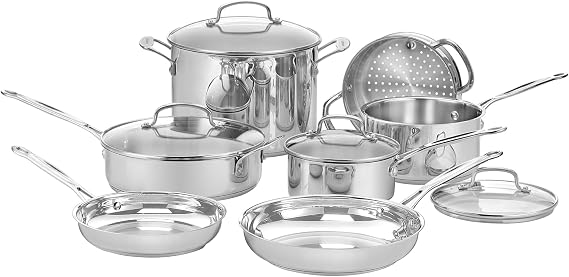
Cuisinart Chef's Classic Stainless Steel 11-Piece Cookware Set (77-11G)
Mirror-finish stainless steel cookware with aluminum-encapsulated base for even heating, cool-grip riveted handles, and drip-free pouring rims. Safe for induction, gas, and electric stovetops and oven-safe up to 500°F.
As an Amazon Associate, LifeMode earns from qualifying purchases.
Final Takeaway
Cooking with stainless steel is largely a matter of temperature control and timing.
Preheat the pan over moderate heat, add oil at the right moment, dry ingredients before cooking, and avoid moving food before it is ready to release.
With these techniques, stainless steel cookware can produce excellent browning, flavorful pan sauces, and reliable results for everyday meals.