
A small pantry can become difficult to use surprisingly quickly. Half-empty packages, duplicate purchases, mismatched containers, and items pushed to the back make it harder to find what you need. The problem is not always a lack of space. Often, it is a lack of a consistent storage system.
A well-organized pantry should make everyday ingredients easy to see, reach, and put away. You do not need custom cabinetry or expensive organizers to achieve that. A few practical changes can make a narrow cupboard or small pantry considerably more functional.
1. Empty the Pantry Before You Organize It
Start by removing everything from the shelves. Organizing around existing clutter usually leads to wasted space and forgotten items.
As you empty the pantry:
- Check expiration and best-before dates.
- Discard food that is spoiled or clearly unsuitable.
- Set aside unopened items you rarely use.
- Group duplicate products together.
- Wipe shelves and allow them to dry before returning anything.
Do not automatically throw away every product that has passed a best-before date. That date is generally about quality rather than an automatic safety deadline, but always follow the product’s storage instructions and discard anything showing signs of spoilage or damaged packaging.
Use this step to identify what you actually store. A pantry used mainly for dry goods needs a different layout from one that also holds small appliances, canned food, snacks, and baking supplies.
2. Group Food by How You Use It
The easiest pantry systems are based on everyday routines rather than complicated labels.
Create practical groups such as:
- Breakfast: cereal, oats, granola, and spreads.
- Baking: flour, sugar, baking powder, and decorations.
- Pasta and grains: pasta, rice, couscous, and similar staples.
- Canned and jarred food: vegetables, beans, sauces, and soups.
- Snacks: crackers, nuts, and packaged snacks.
- Cooking essentials: frequently used ingredients and seasonings.
Keep the items you reach for most often at eye level or on the easiest-to-reach shelves.
Less frequently used ingredients can go higher up, while heavier products should generally be stored on lower shelves. This makes the pantry easier to use and reduces the risk of heavy containers falling.
3. Measure the Shelves Before Buying Containers
One of the most common pantry organization mistakes is buying containers before measuring the available space.
Measure:
- Shelf width.
- Shelf depth.
- Vertical clearance between shelves.
- The height of the tallest products you want to store.
Also consider how much room you need to remove a container without moving everything around it.
For narrow shelves, rectangular containers can make better use of the available depth than round jars. Uniform container shapes can also make stacking and grouping easier.
Avoid filling every inch of the shelf. Leave enough room to take items out, clean the shelves, and see what is stored behind the front row.
4. Use Clear Containers for Frequently Used Dry Goods
Clear containers can make a pantry easier to manage because you can see the contents and estimate how much remains without opening every package.
They are particularly useful for:
- Flour and sugar.
- Pasta and rice.
- Oats and breakfast cereal.
- Nuts and seeds.
- Baking ingredients.
- Snacks that are frequently opened.
Choose containers that suit the food and the available shelf dimensions. Airtight lids can help protect dry goods from moisture and household pests, provided the containers are clean, dry, and properly closed.
Recommended Product: Vtopmart Airtight Food Storage Containers, 24-Piece Set
The Vtopmart 24-piece set is designed for pantry storage and includes multiple container sizes, stackable shapes, airtight-style lids, and reusable labels. The range of sizes can be useful when you want to organize several types of dry ingredients without filling the pantry with unrelated containers.
Before buying, compare the container dimensions with your shelf measurements. A large set is only useful if the pieces fit your actual storage space.
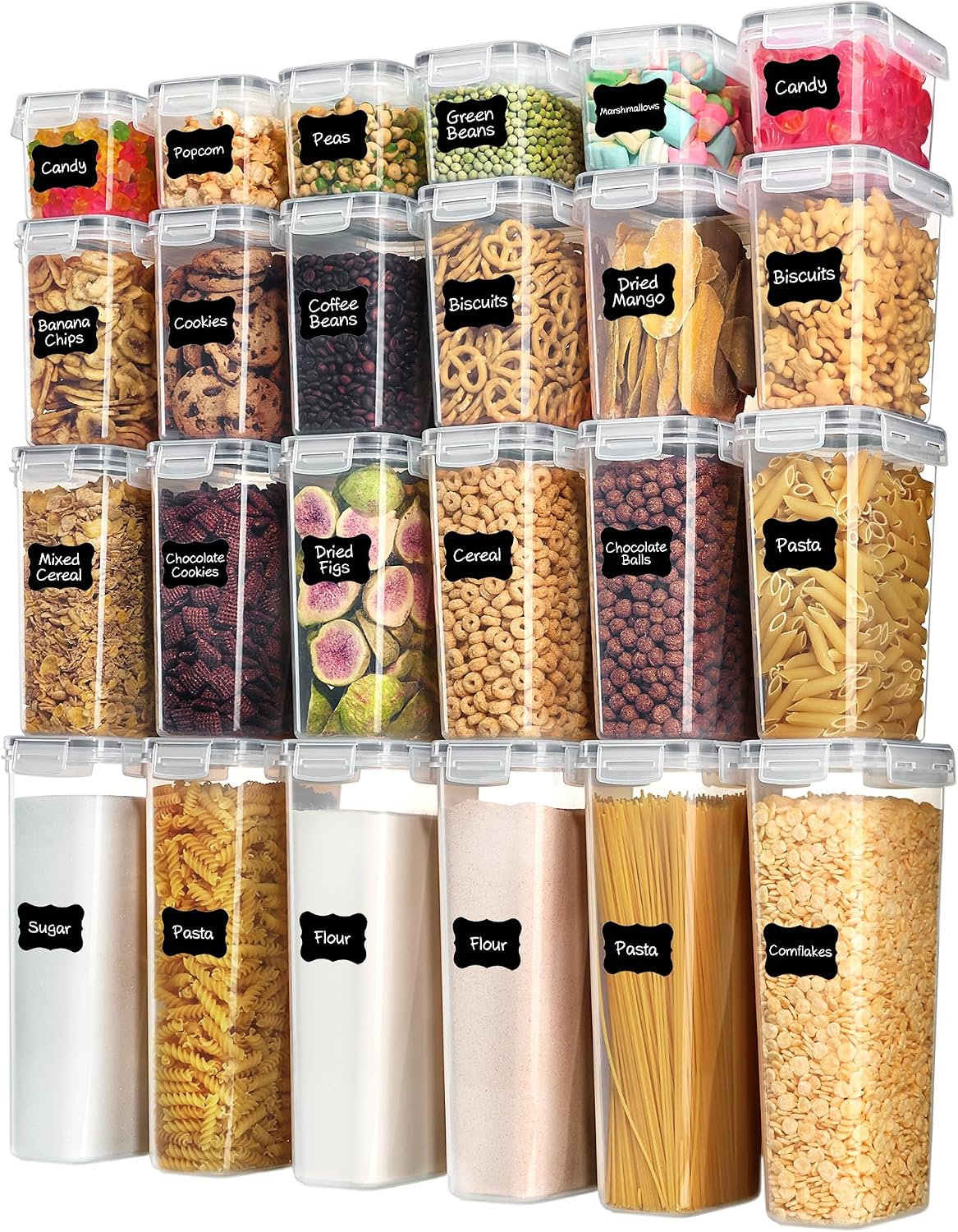
Vtopmart Airtight Food Storage Containers (24-Piece Set)
Airtight pantry storage set with stackable clear containers, side-locking lids, and reusable chalkboard labels. Sized for organizing dry staples, baking ingredients, pasta, and snacks.
As an Amazon Associate, LifeMode earns from qualifying purchases.
5. Label Containers Clearly
A clear container is not always enough to identify its contents. Flour, powdered sugar, and similar ingredients can look almost identical.
Use simple labels that identify:
- The ingredient.
- Any relevant variety, such as brown rice or whole-wheat flour.
- Opening or transfer date when useful.
Avoid adding unnecessary information that makes labels difficult to read. The goal is quick identification, not a complicated inventory system.
If you use reusable labels, make sure they can be removed or updated when the contents change.
6. Make Use of Vertical Space
Small pantries often have more vertical space than horizontal space.
Look for opportunities to add storage without making shelves difficult to access:
- Use shelf risers for cans and jars.
- Add a small tiered organizer for spices.
- Use stackable bins for lightweight packaged foods.
- Store tall bottles together in a stable tray.
- Consider door-mounted storage only if the door and hinges can support the added weight.
Do not stack heavy glass jars or large containers high above eye level. Keep frequently used items accessible and avoid creating unstable towers of products.
7. Keep Opened Packages Under Control
Opened packages are a major source of pantry clutter. Clips can help temporarily close some bags, but they do not always provide an airtight seal.
For ingredients that benefit from sealed storage, transfer them to a suitable container or use the original packaging with an effective closure.
Keep product labels and important storage information available. If you transfer food, note the product name and any relevant use-by information.
Do not mix a new purchase with older food automatically. Use up the older supply first, and clean and dry the container before refilling it.
8. Create a Practical Pantry Layout
A simple shelf arrangement can make a small pantry feel more spacious.
One possible layout:
- Top shelf: Occasional-use ingredients, lightweight backup supplies, seasonal baking items.
- Eye-level shelves: Everyday breakfast foods, frequently used dry ingredients, common cooking staples.
- Lower shelves: Heavier containers, cans and jars, larger packaged items.
- Floor or bottom storage: Large, stable items that are safe to lift, bulk supplies that do not need frequent access.
Adjust the layout to your household. If children use the pantry, keep appropriate snacks within their reach and store unsuitable products securely.
9. Maintain the System With a Short Weekly Reset
A pantry does not stay organized simply because it was arranged once.
A short weekly check can prevent clutter from returning:
- Put misplaced items back into their groups.
- Move older products toward the front.
- Check which staples are running low.
- Remove empty packaging.
- Wipe up crumbs or spills promptly.
Before shopping, check the pantry for items you already have. This reduces duplicate purchases and helps you use ingredients before they are forgotten.
Common Pantry Organization Mistakes
- Buying Too Many Matching Containers: A large container set may look attractive, but unused pieces take up storage space. Start with the ingredients you use regularly and add containers only when they solve a real problem.
- Decanting Everything: Not every product needs a separate container. Some packaged foods are easier to keep in their original packaging, particularly when the packaging contains important instructions or preparation details.
- Storing Food Without Checking Its Requirements: Different foods have different storage needs. Follow the packaging instructions, and do not assume that every dry-looking product belongs in the pantry.
- Making the System Too Complicated: Too many categories, labels, and rules make a pantry harder to maintain. A simple arrangement that everyone in the household understands is usually more effective.
Small Pantry Organization Checklist
- Empty and clean the pantry.
- Check dates and condition of stored food.
- Group ingredients by use.
- Measure shelves before buying organizers.
- Choose suitable containers for frequently used dry goods.
- Label transferred ingredients.
- Use vertical space safely.
- Keep heavier items on lower shelves.
- Put older products at the front.
- Review the pantry regularly.
For additional guidance on pantry shelf layouts and pest defense, consult our printable Pantry Organization Cheat Sheet and calculate storage requirements with the Small-Space Storage Planner.
Final Thoughts
A small pantry can work well when every shelf has a clear purpose and frequently used ingredients are easy to reach. Start by removing unnecessary items, grouping food by use, and measuring the available space. Then introduce containers and organizers only where they make everyday storage easier.
The best pantry system is not the one with the most matching containers. It is the one you can maintain without effort.