
Light is one of the most important factors in keeping houseplants healthy. It affects how quickly plants grow, how well they maintain their leaves, and whether flowering varieties produce blooms.
However, not every indoor plant needs direct sunlight. Some thrive beside a bright window, while others prefer filtered light or tolerate lower-light conditions.
The challenge is understanding what low, medium, and bright indirect light actually mean in a home. This guide explains how to assess natural light, choose a suitable location, and use an LED grow light when daylight is insufficient. Proper lighting also influences water absorption; see our guide on Diagnosing Houseplant Watering and Drainage Problems to balance moisture with your lighting setup.
1. Understand the Three Main Indoor Light Levels
Plant labels often describe light requirements using three broad categories: low, medium, and bright.
These terms are useful starting points, but they are not precise measurements. The actual light reaching a plant changes with the window direction, distance from the glass, season, outdoor obstructions, and time of day.
Low Light
Low-light locations receive relatively little natural light. They are often several feet away from windows or near north-facing windows with limited exposure.
Some plants tolerate these conditions, including certain varieties of:
- Snake plants
- ZZ plants
- Pothos
- Cast iron plants
Low light does not mean no light. A plant may survive in a dim corner but grow very slowly or become weak over time.
Medium Light
Medium-light locations usually receive moderate natural daylight without prolonged direct sun.
Examples include:
- Near an east-facing window
- A few feet back from a bright west-facing window
- A bright room with filtered daylight
Many common tropical foliage plants can grow well in these conditions, depending on the species.
Bright Indirect Light
Bright indirect light means the area receives strong daylight, but the plant is protected from intense direct sunlight for much of the day.
Suitable locations may include:
- Near an east-facing window
- Beside a bright south- or west-facing window with a sheer curtain
- A well-lit position where sunlight is filtered by trees or external shading
Many popular tropical houseplants prefer this type of environment.
Direct Sunlight
Some plants need several hours of direct sunlight. Succulents and many cacti generally require brighter conditions than typical tropical foliage plants.
However, moving a plant suddenly from indirect light into strong direct sun can cause leaf scorch. Increase exposure gradually and monitor the leaves.
2. Choose the Right Window
Window direction provides a useful starting point when deciding where to place plants.
- North-facing windows: Usually provide lower and more consistent natural light in the Northern Hemisphere. They can suit plants with modest light requirements, although the exact intensity depends on the surroundings.
- East-facing windows: Receive morning sunlight, which is often less intense than afternoon sun. They can be suitable for many plants that prefer bright but not excessively hot conditions.
- South-facing windows: Usually provide the strongest natural light in the Northern Hemisphere. Plants may need to be positioned farther from the glass or protected with a sheer curtain.
- West-facing windows: Receive afternoon sunlight, which can be intense, particularly during summer. Watch for leaf scorch and excessive heat.
These are general guidelines, not guarantees. Nearby buildings, trees, balconies, curtains, and seasonal changes can significantly alter the light available.
3. Recognise the Signs of Insufficient Light
A plant that does not receive enough light may gradually change its growth pattern.
Look for these signs:
- Long, stretched stems
- Larger gaps between leaves
- Smaller new leaves
- Slow or weak growth
- Loss of variegation in some varieties
- Few or no flowers in plants that normally bloom
This stretched growth is often called etiolation. The plant is growing towards the available light.
If you notice these symptoms, move the plant closer to a suitable window or consider supplementary lighting.
Do not immediately place it in direct sunlight. Increase light exposure gradually to avoid stress.
4. Recognise the Signs of Too Much Light
Excessive direct sunlight can also damage indoor plants.
Common symptoms include:
- Bleached or faded patches
- Brown, dry areas on leaves
- Scorched leaf edges
- Leaves curling or becoming unusually dry
- Sudden deterioration after moving the plant to a brighter location
If these symptoms appear, move the plant slightly farther from the window or filter the sunlight with a curtain.
Remember that some plants naturally prefer direct sun. The correct response depends on the species and its previous growing conditions.
5. Why Indoor Plants May Need Artificial Lighting
Natural daylight is not always sufficient.
A room may appear bright to the human eye while providing relatively little usable light for plant growth. This is particularly common in winter, in rooms with small windows, or in apartments surrounded by other buildings.
Artificial grow lights can help supplement natural daylight.
They are useful for:
- Plants kept far from windows
- Dark rooms and shaded corners
- Seedlings and young plants
- Indoor herb collections
- Plants that need more consistent light throughout the year
A dedicated grow light is generally a better choice than relying on an ordinary decorative lamp. The important factors include light output, spectrum, distance from the plant, and daily exposure time.
6. How to Use an LED Grow Light
A compact grow light can provide supplementary illumination for a small collection of indoor plants.
The GooingTop LED Grow Light (ASIN: B085CDPSMR) is a clip-on model with a flexible positioning arm, full-spectrum white and red LEDs, five brightness levels, and automatic timer settings.
Its adjustable design makes it suitable for positioning above individual plants or a small group.
To use a grow light effectively:
- Secure the clamp to a stable surface.
- Position the light so it illuminates the plant evenly.
- Start with a moderate brightness setting.
- Select a timer duration appropriate for the plant and the amount of natural daylight it already receives.
- Observe new growth and leaf condition over the following weeks.
- Adjust the distance, brightness, or duration if necessary.
The model offers 4-, 8-, and 12-hour timer settings. These are convenient operating options, not universal recommendations for every plant.
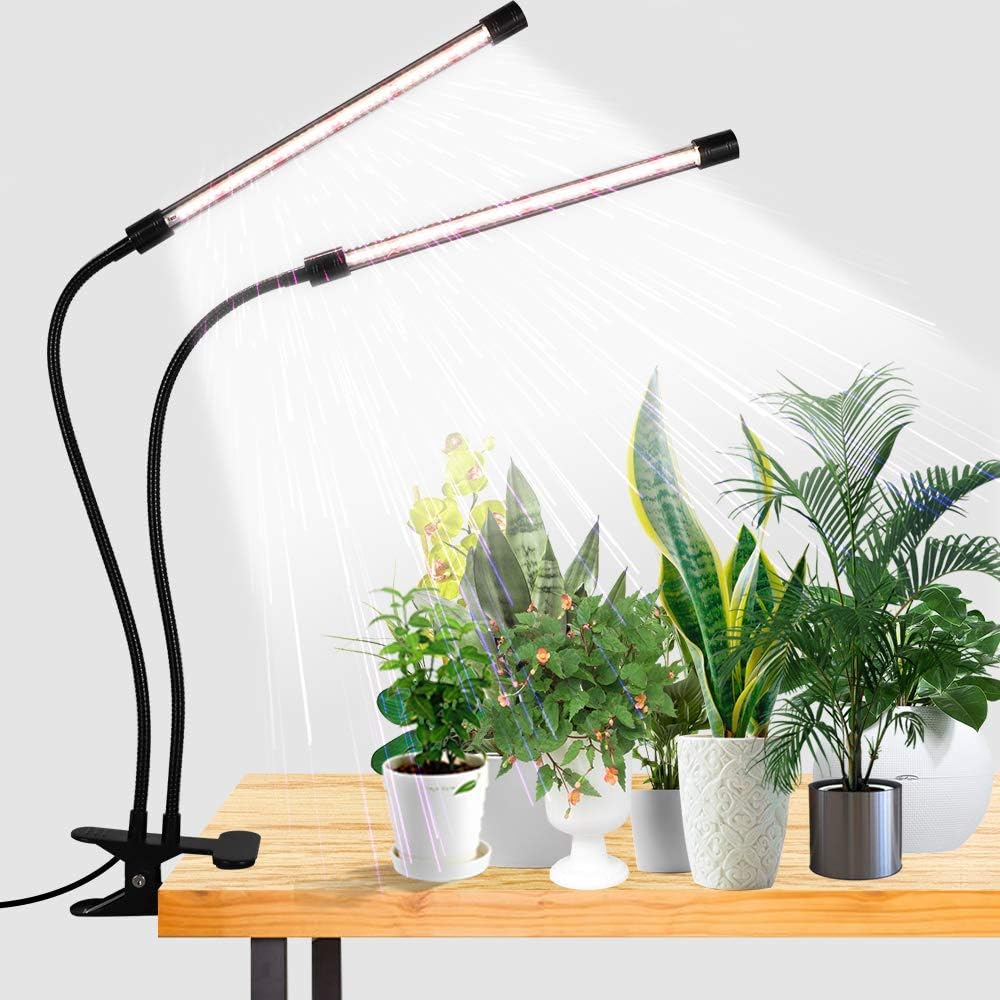
GooingTop LED Grow Light
Clip-on full-spectrum LED grow light with flexible dual goosenecks, 5 dimming levels, and a 4/8/12-hour timer designed to supplement natural light for indoor plants and herbs.
As an Amazon Associate, LifeMode earns from qualifying purchases.
7. How Many Hours of Grow Light Do Houseplants Need?
There is no single lighting schedule that works for all indoor plants.
The required daily light exposure depends on the species, the intensity of the light, and how much natural daylight the plant receives.
As a practical starting point:
- Plants receiving substantial natural daylight may need only a few additional hours.
- Plants in moderately lit rooms may benefit from a longer supplementary period.
- Plants in very dim locations may need more consistent artificial lighting, provided the light is strong enough.
More hours do not automatically mean better growth. Plants also need a dark period, and excessive exposure can cause stress.
Avoid leaving grow lights on continuously. Use a consistent daily schedule and adjust it according to the plant’s requirements.
8. Why Distance from the Light Matters
A grow light’s effectiveness depends not only on its brightness setting but also on its distance from the leaves.
Moving a light farther away generally reduces the intensity reaching the plant. Moving it too close can create uneven exposure or excessive light for sensitive foliage.
Start with the manufacturer’s recommended positioning where available. If no reliable distance guidance is provided, begin conservatively and monitor the plant.
Look for:
- Healthy, compact new growth
- Normal leaf colour
- No bleaching or scorched patches
- Consistent development across the plant
If growth remains stretched, the plant may need stronger light, a closer position, or a longer exposure period. If leaves become bleached or damaged, reduce the intensity or increase the distance.
9. Common Indoor Lighting Mistakes
Using room brightness as the only guide
Human eyes adapt to different light levels. A room that looks bright may still provide insufficient light for a high-light plant.
Placing every plant directly beside a sunny window
Some species are sensitive to intense direct sunlight, especially when they have adapted to shaded conditions.
Expecting a grow light to compensate for every problem
Artificial lighting cannot correct poor drainage, root damage, pests, or unsuitable temperatures.
Ignoring seasonal changes
A plant that receives sufficient light in summer may struggle in winter as daylight hours decrease and the sun’s position changes.
Keeping grow lights on all day and night
Plants need a regular dark period. More artificial light is not always better.
10. Create a Simple Indoor Plant Lighting Plan
A practical approach is to group plants according to their light requirements.
- Group 1: Low-light plants
Place these in areas with limited but usable natural daylight. Monitor growth and move them closer to a window if they become stretched or weak. - Group 2: Medium-light plants
Position these near windows where they receive moderate daylight without prolonged direct sun. - Group 3: Bright-light plants
Place these close to bright windows, adjusting their position to prevent excessive direct exposure where necessary. - Group 4: Plants needing supplementary light
Use a grow light where natural daylight is insufficient. Keep the lighting schedule consistent and adjust it according to the plant’s response.
Review the arrangement when seasons change. A simple relocation may be enough to improve plant health without buying additional equipment.
Final Thoughts
Healthy indoor plants need the right amount of light, not simply the brightest possible location.
Start by identifying each plant’s requirements, assess the natural daylight in your home, and watch how the plant responds to its position. If natural light is limited, a compact LED grow light can provide useful supplementary illumination.
The GooingTop LED Grow Light offers adjustable brightness, a flexible mounting arm, and timer settings for small indoor plant collections. Used thoughtfully, it can help make a darker room more suitable for plants that need additional light. Explore our Home & Garden Hub for more practical guides and plant care advice.