
A small closet can feel overcrowded even when it does not contain that many clothes. Bulky hangers, poorly arranged shelves, unused vertical space, and clothes that are rarely worn can quickly reduce the amount of usable storage.
The solution is not necessarily a bigger wardrobe. A more efficient layout, consistent hangers, and a few carefully chosen organizers can make a small closet easier to use.
This guide explains how to reorganize a compact closet without expensive renovations or complicated storage systems.
1. Start by Removing Clothes You Do Not Wear
Before buying organizers, take everything out of the closet and review what you own.
Separate your clothes into four groups:
- Regularly worn items.
- Seasonal clothing.
- Clothes that need repair or cleaning.
- Items you no longer wear.
Be realistic about what deserves valuable closet space. Clothes that have not been worn for a long time may be better donated, sold, or recycled, depending on their condition.
Do not discard seasonal clothing simply because it is not currently in use. Store it separately if you have a suitable alternative space.
Once you have reduced the contents, clean the shelves, hanging rails, and floor.
2. Measure the Closet Before Choosing Organizers
Storage products should fit the closet rather than dictate how you use it.
Measure:
- The width and depth of the closet.
- The height of the hanging rail.
- The vertical space above the rail.
- Shelf dimensions.
- The available floor area.
- The clearance needed for doors and drawers.
Pay attention to the depth of the closet. An organizer that fits the width may still make clothes difficult to access if it extends too far forward.
If you have sliding doors, check that hanging clothes and storage boxes do not obstruct their movement.
3. Switch to Slim, Consistent Hangers
One of the easiest ways to improve a crowded closet is to replace bulky, mismatched hangers.
Traditional plastic or wooden hangers can take up considerable rail space. Slim hangers allow clothes to hang closer together, creating more room without changing the closet itself.
Using the same hanger style also creates a more uniform appearance and makes it easier to see what you own.
Recommended Product: Amazon Basics Slim Velvet Non-Slip Hangers, 50-Pack
The Amazon Basics slim velvet hangers have a narrow profile and a non-slip surface designed to help keep clothing in place. The pack of 50 provides a consistent hanger system for a larger section of a wardrobe.
Their velvet-coated surface can be useful for garments that tend to slide off smooth plastic hangers. The slim shape also helps make better use of limited hanging-rail space.
They are particularly suitable for:
- Shirts and blouses.
- Lightweight dresses.
- Jackets and everyday tops.
- Clothing that tends to slip on smooth hangers.
For heavy coats, structured garments, or delicate items that require special support, use an appropriate stronger or shaped hanger instead.
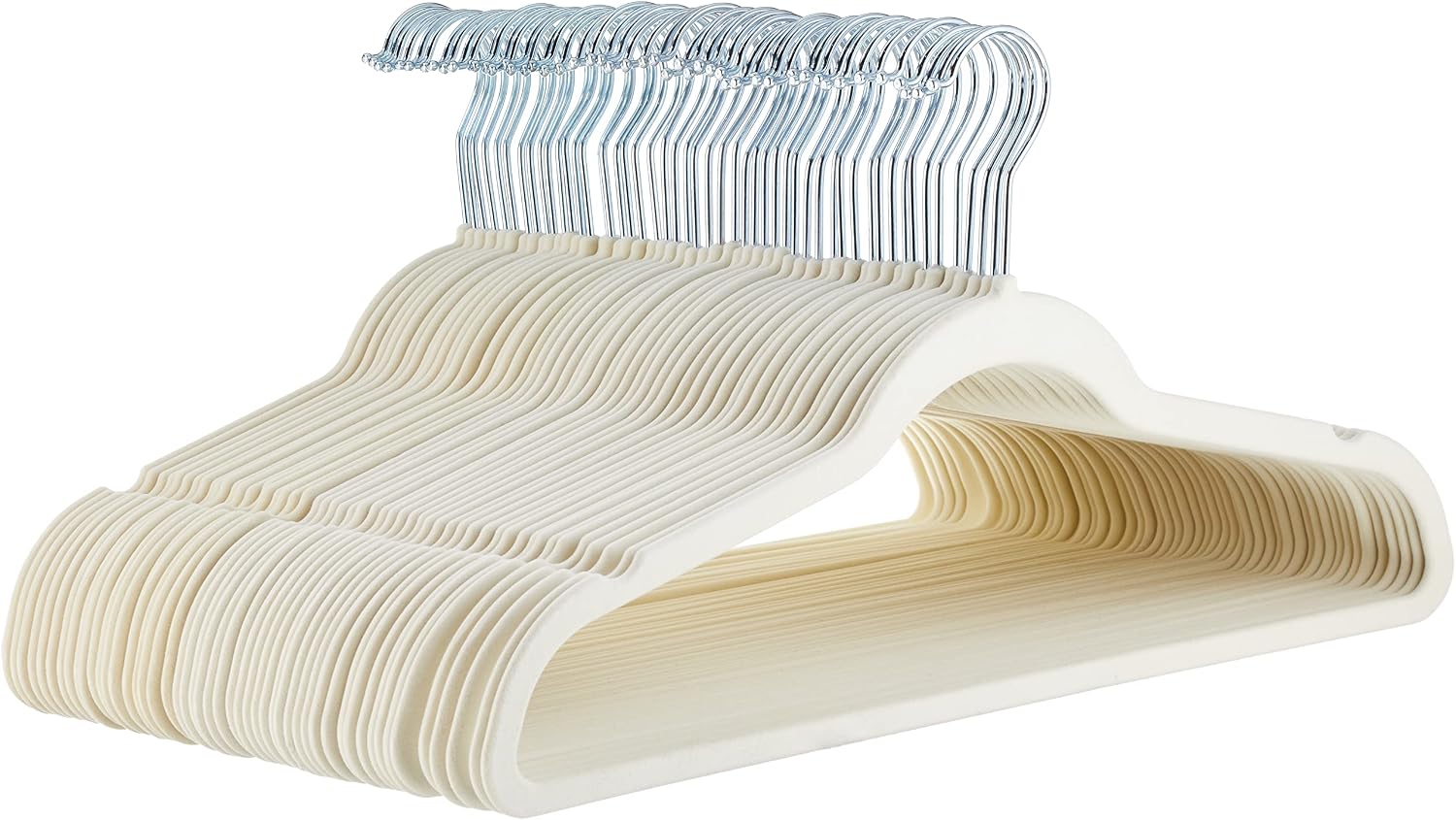
Amazon Basics Slim Velvet Non-Slip Hangers (50-Pack)
Slim-profile hangers with black velvet-textured non-slip coating designed to keep garments secure while saving valuable rail space in compact closets.
As an Amazon Associate, LifeMode earns from qualifying purchases.
4. Organize Clothes by Category
Once you have a consistent hanger system, arrange clothing in a way that makes everyday choices easier.
Useful categories include:
- Shirts and tops.
- Trousers and skirts.
- Dresses.
- Jackets and coats.
- Workwear.
- Special-occasion clothing.
Within each group, you can arrange items by color or frequency of use.
Keep everyday clothes in the most accessible section. Move occasional-use and seasonal garments to less convenient areas.
Avoid overcrowding the rail. Clothes should be easy to remove and return without pulling neighboring items off their hangers.
5. Make Better Use of Vertical Space
The space above a hanging rail or below a shelf is often underused.
Depending on your closet layout, consider:
- Stackable storage boxes for seasonal clothing.
- Shelf dividers for folded garments.
- Hanging organizers for lightweight accessories.
- Small bins for belts, scarves, and other accessories.
- A second hanging rail where the available height permits it.
Do not install a second rail without checking the length of your clothes. Long dresses, coats, and trousers need sufficient vertical clearance.
Store heavier objects on stable, lower shelves rather than high above your head.
6. Fold Clothes to Save Shelf Space
Not every item needs to be hung.
Fold suitable garments such as:
- T-shirts.
- Sweaters.
- Jeans.
- Casual trousers.
- Sleepwear.
Arrange folded clothes in manageable stacks or use drawer dividers and bins to prevent them from spreading across the shelf.
For frequently worn items, vertical folding in drawers can make individual pieces easier to identify without disturbing the rest of the stack.
Avoid excessively high piles. Smaller stacks are easier to maintain and less likely to collapse.
7. Create a Dedicated Space for Shoes
Shoes often consume valuable closet floor space.
Instead of leaving them scattered, group them by type and frequency of use.
Possible solutions include:
- A low shoe rack.
- Stackable shoe boxes.
- A narrow vertical organizer.
- A dedicated shelf for everyday footwear.
Keep frequently worn shoes accessible. Store occasional-use pairs higher or in labeled boxes.
Make sure footwear is clean and dry before putting it away, particularly after rainy or snowy weather.
8. Use the Door and Side Walls Carefully
The inside of a closet door can provide additional storage, but only if the design allows it.
Over-door organizers can be useful for lightweight accessories, while hooks may provide a convenient place for belts, bags, or frequently used items.
Before installing anything, check:
- Whether the door can close properly.
- Whether the added weight is suitable for the hinges.
- Whether the organizer interferes with shelves or hanging clothes.
- Whether the stored items remain easy to reach.
Avoid placing too many objects on the door. An overloaded organizer can become inconvenient and may damage the door or its hardware.
9. Store Seasonal Clothing Separately
Keeping every season’s clothing in the same small closet makes it harder to access what you need.
When the weather changes, move less relevant clothing into suitable storage.
For example:
- Store heavy winter clothing during warm months.
- Move lightweight summer garments out of the main hanging area during winter.
- Use labeled containers for items stored on higher shelves.
- Keep frequently used seasonal accessories accessible.
Make sure clothing is clean and completely dry before long-term storage. Follow garment care instructions, and choose breathable storage where appropriate.
10. Maintain the Closet With a Simple Routine
A closet can become cluttered again if items are not returned to their designated places.
A short weekly reset helps:
- Return misplaced clothes to their categories.
- Remove empty packaging and unnecessary items.
- Put shoes back in their designated area.
- Check whether shelves or drawers are becoming overcrowded.
- Move seasonal items when necessary.
Every few months, review the clothes you have not worn and decide whether they still deserve space in your closet.
Common Small Closet Organization Mistakes
- Using Too Many Storage Products: Buying organizers before understanding the problem often creates more clutter. Start with the available space and introduce only the products that solve a specific issue.
- Overloading the Hanging Rail: Slim hangers can create additional room, but they do not make a closet unlimited. Leave enough space to remove clothes comfortably.
- Ignoring Clothing Type: Not every garment belongs on the same hanger. Heavy coats, delicate fabrics, and structured clothing may need different support.
- Storing Everything at Eye Level: Use the full height of the closet, but keep everyday items within easy reach. Higher shelves are better suited to lighter and less frequently used belongings.
- Making the System Difficult to Maintain: A complicated arrangement may look impressive initially but often becomes inconvenient. Choose categories and storage solutions that fit your daily habits.
Small Closet Organization Checklist
- Remove clothes that are no longer needed.
- Clean shelves and hanging rails.
- Measure the available storage space.
- Replace bulky, mismatched hangers where appropriate.
- Group clothing by category.
- Fold suitable garments for shelf storage.
- Use vertical space efficiently.
- Create a dedicated shoe storage area.
- Store seasonal clothing separately.
- Review and reset the closet regularly.
To calculate rod capacity and hanging tier blueprints for your wardrobe, use our interactive Small-Space Storage Planner and review fabric care guidelines in our Laundry Care Cheat Sheet.
Final Thoughts
A small closet does not have to feel permanently overcrowded. Removing unused items, using slim hangers, organizing clothing by category, and making better use of vertical space can significantly improve its functionality.
Start with the changes that solve your biggest storage problems. A simple system that works every day is more valuable than a closet full of organizers that are difficult to maintain.